
The coating rarely fails — the bond does
When an epoxy or polyaspartic garage floor starts peeling, the coating itself is usually still in fine shape. What failed is the bond between the coating and the concrete. A coating that is resting on a weak, dusty, un-profiled surface will lift off in sheets the moment moisture or a hot tire stresses it.
Why preparation sets the lifespan
A properly diamond-ground floor has a mechanical CSP-2 surface profile — the concrete pores are opened so the coating sinks in and locks mechanically. That bond is what keeps the floor down through years of hot tires, road salt, and freeze-thaw movement.
Skip that prep — or substitute acid-etching, which does not actually open the pores — and you get a coating sitting on top of the concrete instead of bonded into it. That is the floor that peels.
The coating system matters too
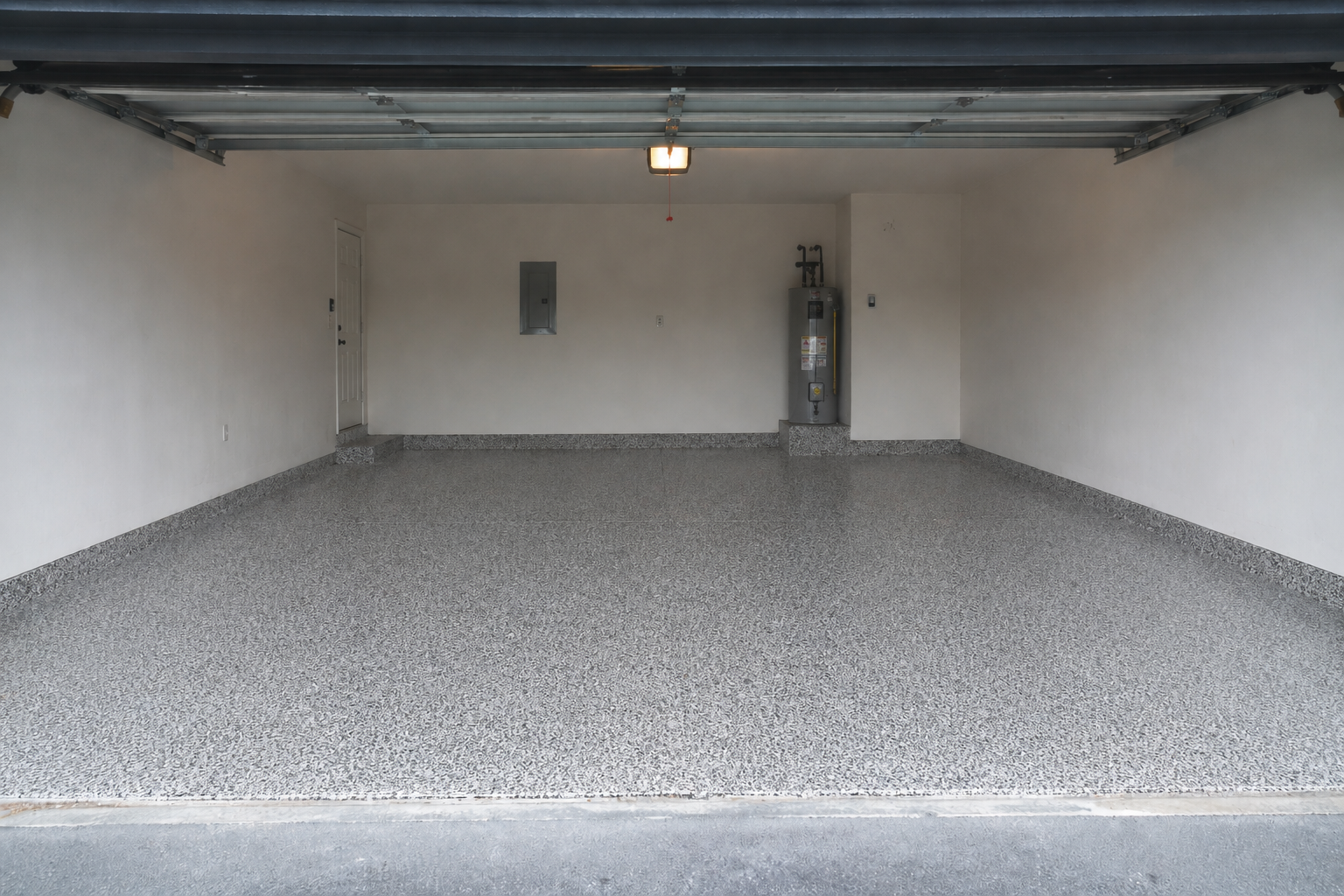
A full decorative flake polyaspartic system (base coat, flake broadcast, and a clear polyaspartic top coat) holds up far longer than a single-coat epoxy kit. The flake layer hides wear and minor scratches, and the UV-stable top coat resists the yellowing and chalking that ages a floor visually long before it fails physically.
How to keep it looking new
Maintenance is simple: sweep regularly, mop with a mild soap when needed, and clean up oil or chemical spills promptly. Because polyaspartic is non-porous, nothing soaks in to stain it. Avoid dragging sharp steel across the floor and your coating will keep its gloss for years.
Want a floor that is actually built to last? Our process page walks through the prep behind every Killen Epoxy floor, and you can request a free estimate to see it in person.
Get a Free Estimate for Your Floor
Reading is a start — let us come measure your actual slab and give you an honest quote. Free, no-pressure, on-site.