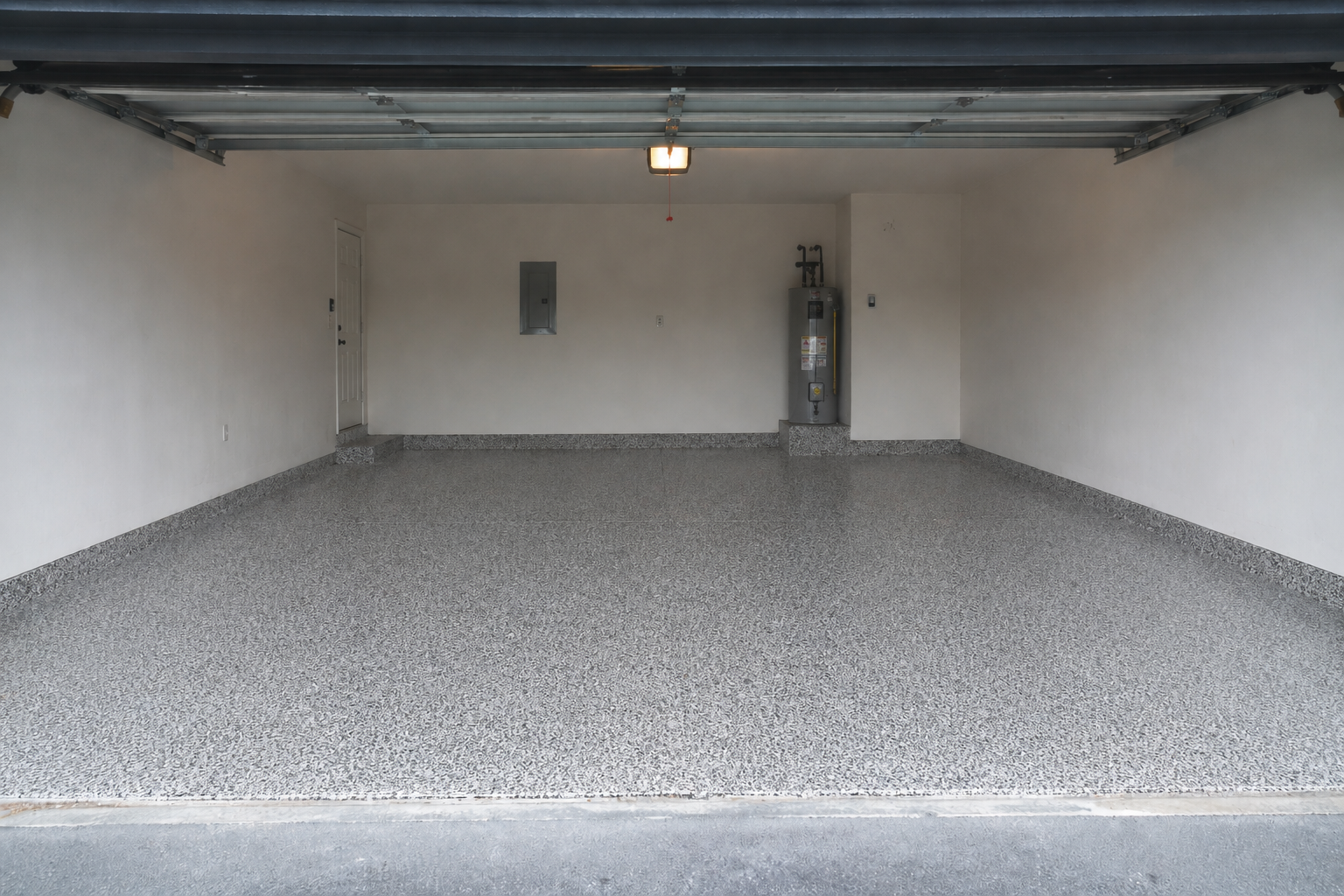
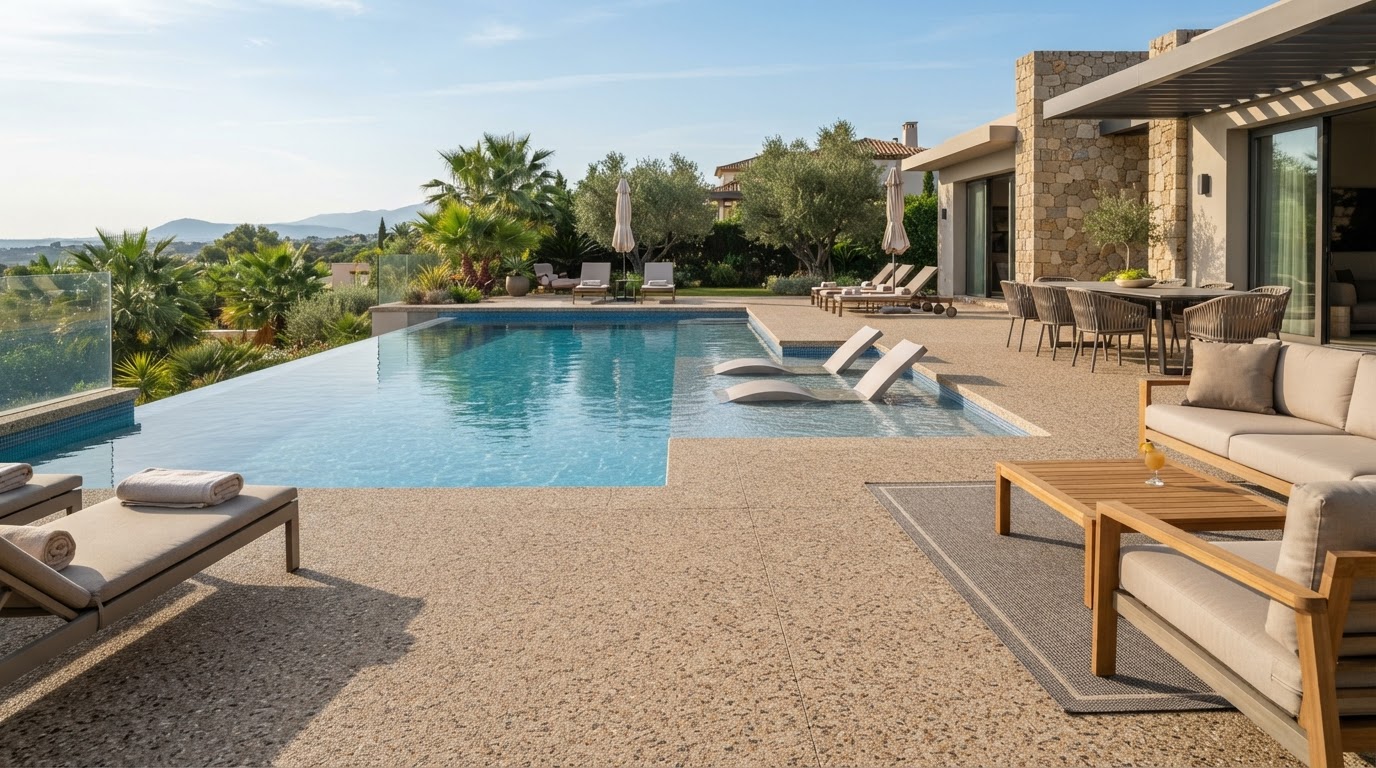
Michigan weather is the real stress test
Few climates test a coating like a Michigan winter followed by a humid summer. Freeze-thaw cycles push moisture through concrete, road salt attacks surfaces, and summer UV bakes outdoor slabs. A coating that survives here has to be specified for it.
Freeze-thaw and concrete movement
Concrete expands and contracts with temperature and moisture. Over a Michigan winter, water that soaks into a slab freezes, expands, and micro-fractures the surface — which is how bare concrete spalls. A flexible, UV-stable polyaspartic coating moves with the slab instead of cracking, and its non-porous surface keeps the water out in the first place.
Temperature and cure time
Coating chemistry is temperature-sensitive. Both epoxy and polyaspartic cure faster in warm conditions and slower in the cold, and a slab that is too cold or too hot can cause adhesion or cure problems. We schedule installs around slab temperature and use the fast-cure flexibility of polyaspartic to work in a wider window than slow-curing epoxy allows.
Humidity and outdoor installs
High humidity and dew points affect how coatings flow and cure, especially outdoors. We watch conditions and avoid coating a wet or condensing slab, because moisture under the coating causes adhesion failure and blushing.
UV and outdoor surfaces
Direct sun will yellow and chalk non-UV-stable coatings — which is why we use UV-stable polyaspartic for patios, pool decks, and any outdoor surface. It resists the sun that would turn an ordinary coating chalky and dull within a couple of seasons.
Want a floor built for your actual weather? Our process is specified for Michigan conditions — request a free estimate and we will walk you through it.
Get a Free Estimate for Your Floor
Reading is a start — let us come measure your actual slab and give you an honest quote. Free, no-pressure, on-site.