Two materials, different jobs
Epoxy and polyaspartic are both concrete coating materials, but they are not interchangeable. Epoxy is commonly used as a base coat that bonds well to profiled concrete and is popular for metallic finishes. Polyaspartic is a faster-curing top coat that resists yellowing and is often used to seal and protect the floor.
Many coating systems combine both — a base coat for adhesion and a polyaspartic top coat for protection. Asking which material is used where helps you understand what you are actually getting.
Questions to ask about your system
Ask which coat is epoxy and which is polyaspartic, and why that combination suits your space. Ask how the system handles the conditions your floor will face — hot tires, moisture, UV exposure, or freeze-thaw cycles.
Also ask about cure time and return-to-service. Polyaspartic generally cures faster than epoxy, but the real timeline depends on the specific products and conditions on your project.
Finish options and where each works best
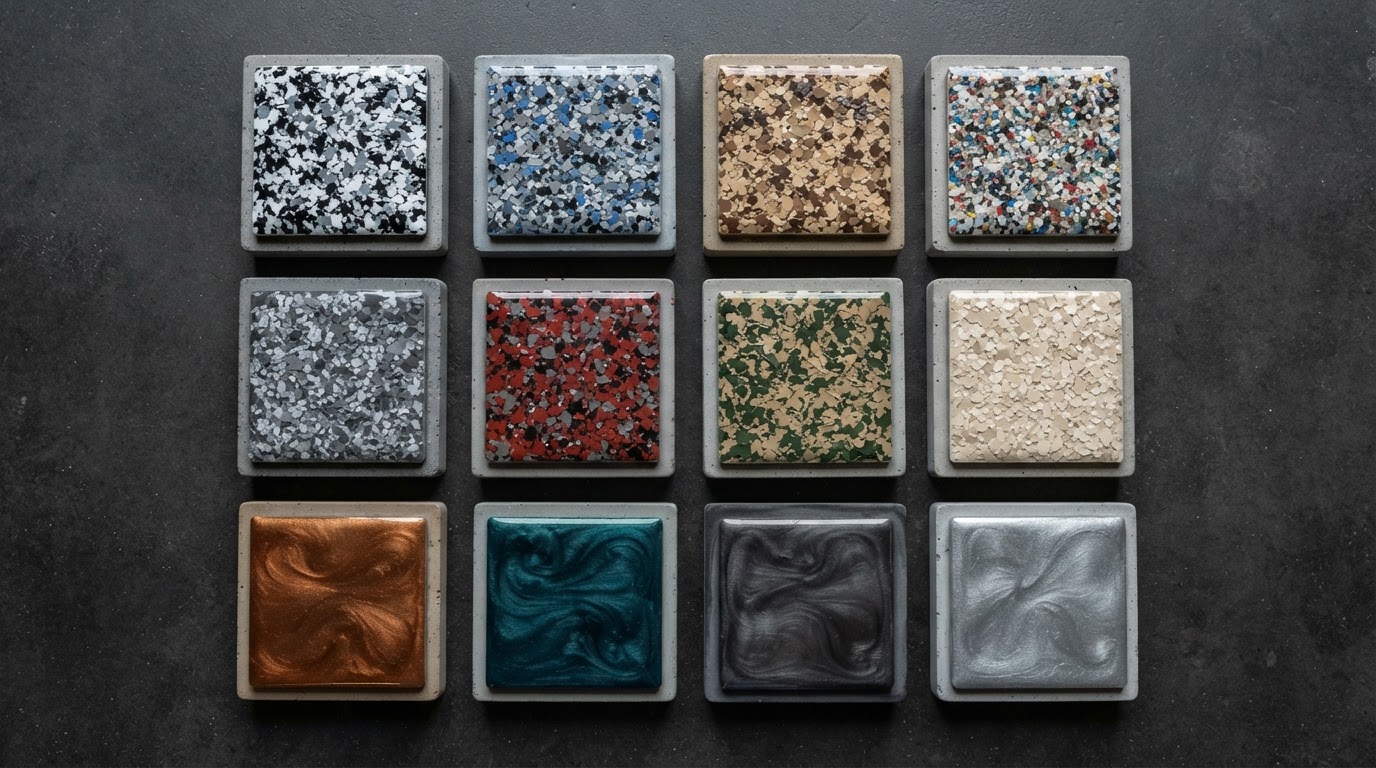
Decorative flake finishes work well in garages, basements, and patios where you want texture and color variety. Metallic epoxy creates a high-gloss, dramatic look suited to lower-traffic, high-visual-impact spaces.
For outdoor areas like pool decks, ask about UV stability and anti-slip texture. The right system matches the finish to how you actually use the space.
Get answers for your specific floor
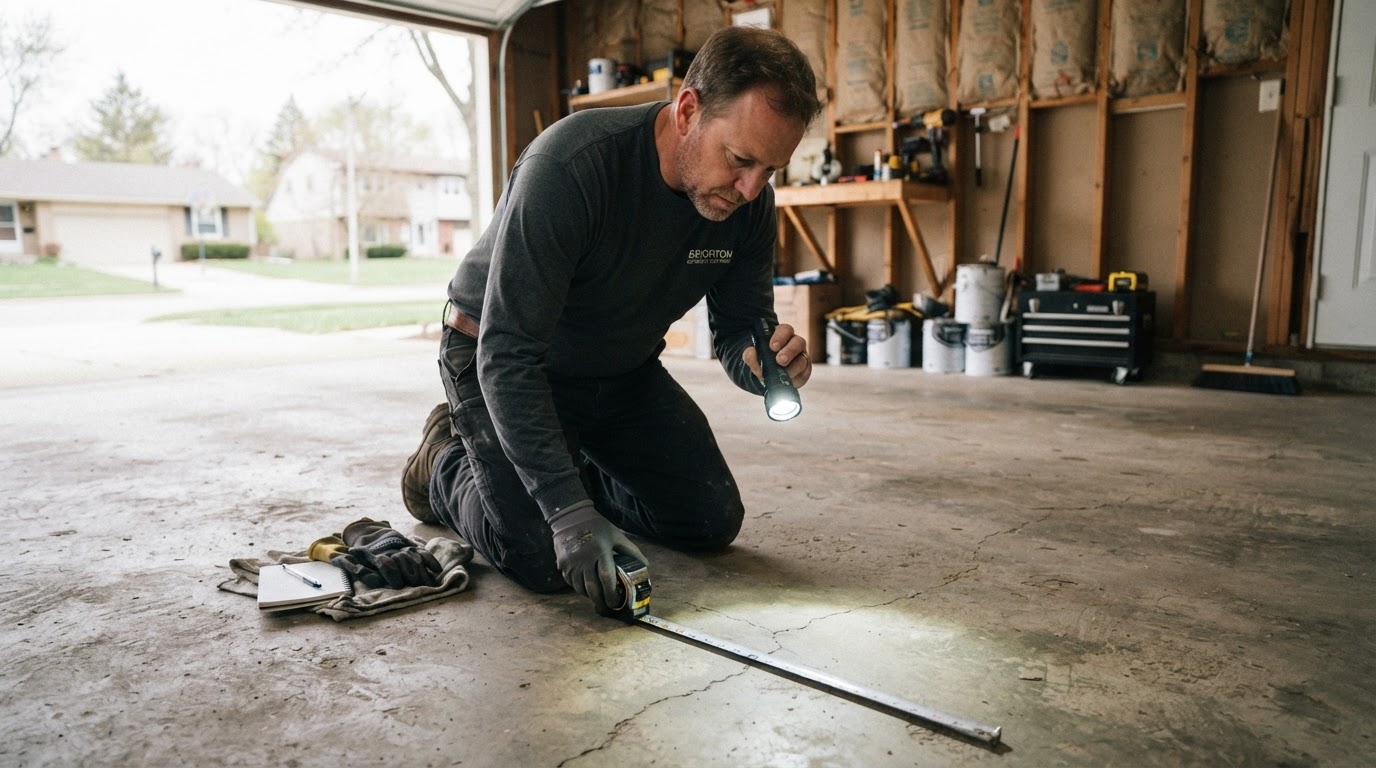
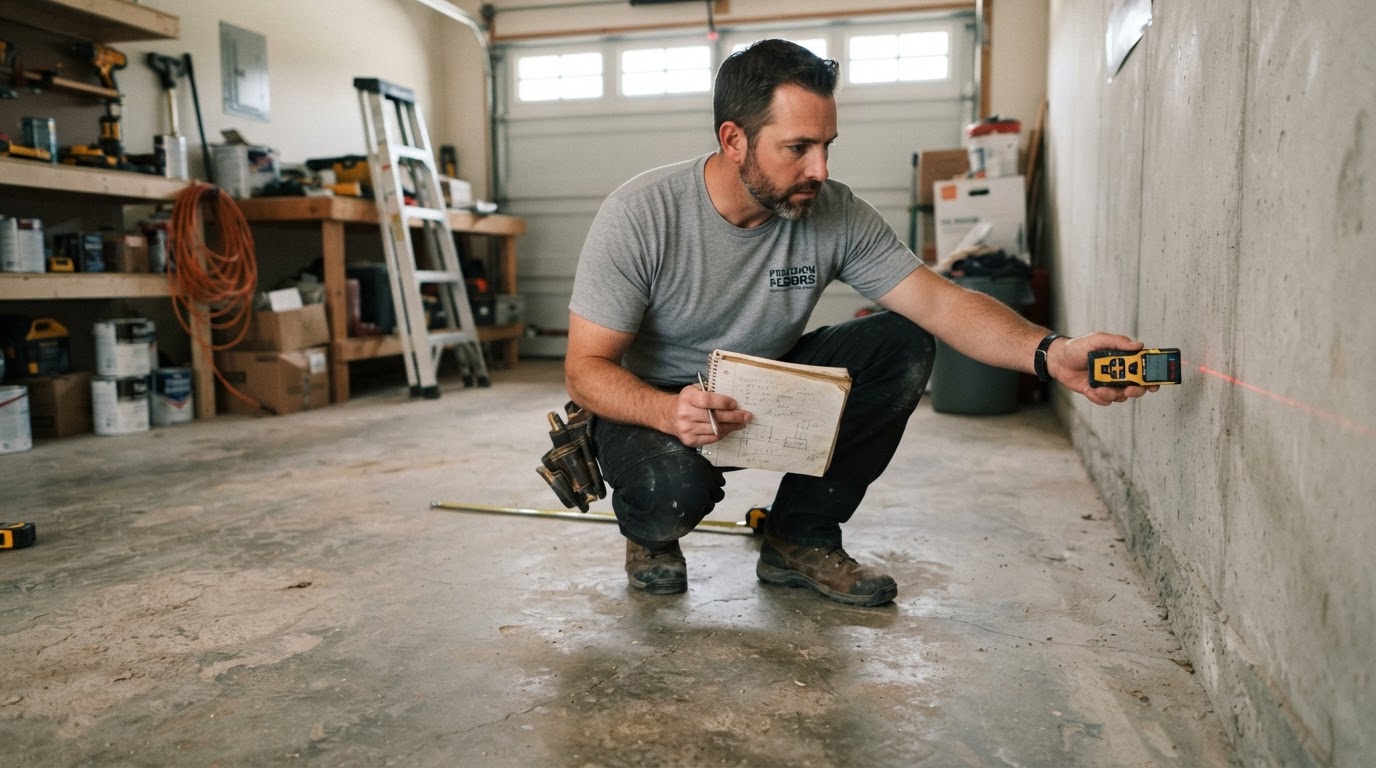
The best way to choose a coating system is an on-site assessment. We inspect your concrete, discuss how you use the space, and recommend a system with the right materials and finish.
Request a free quote to get specific answers for your floor.
Get a Free Estimate for Your Floor
Reading is a start — let us come measure your actual slab and give you an honest quote. Free, no-pressure, on-site.