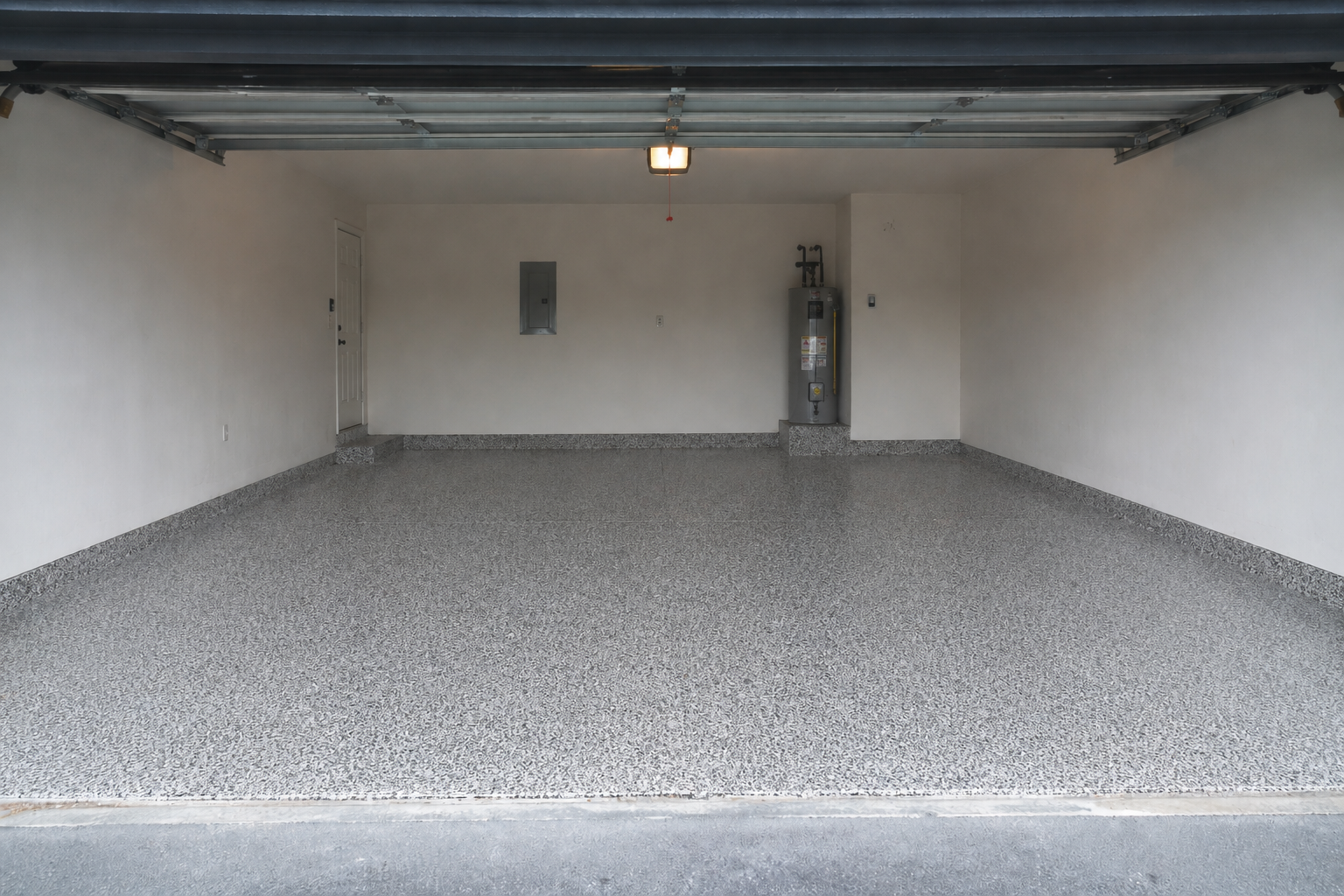
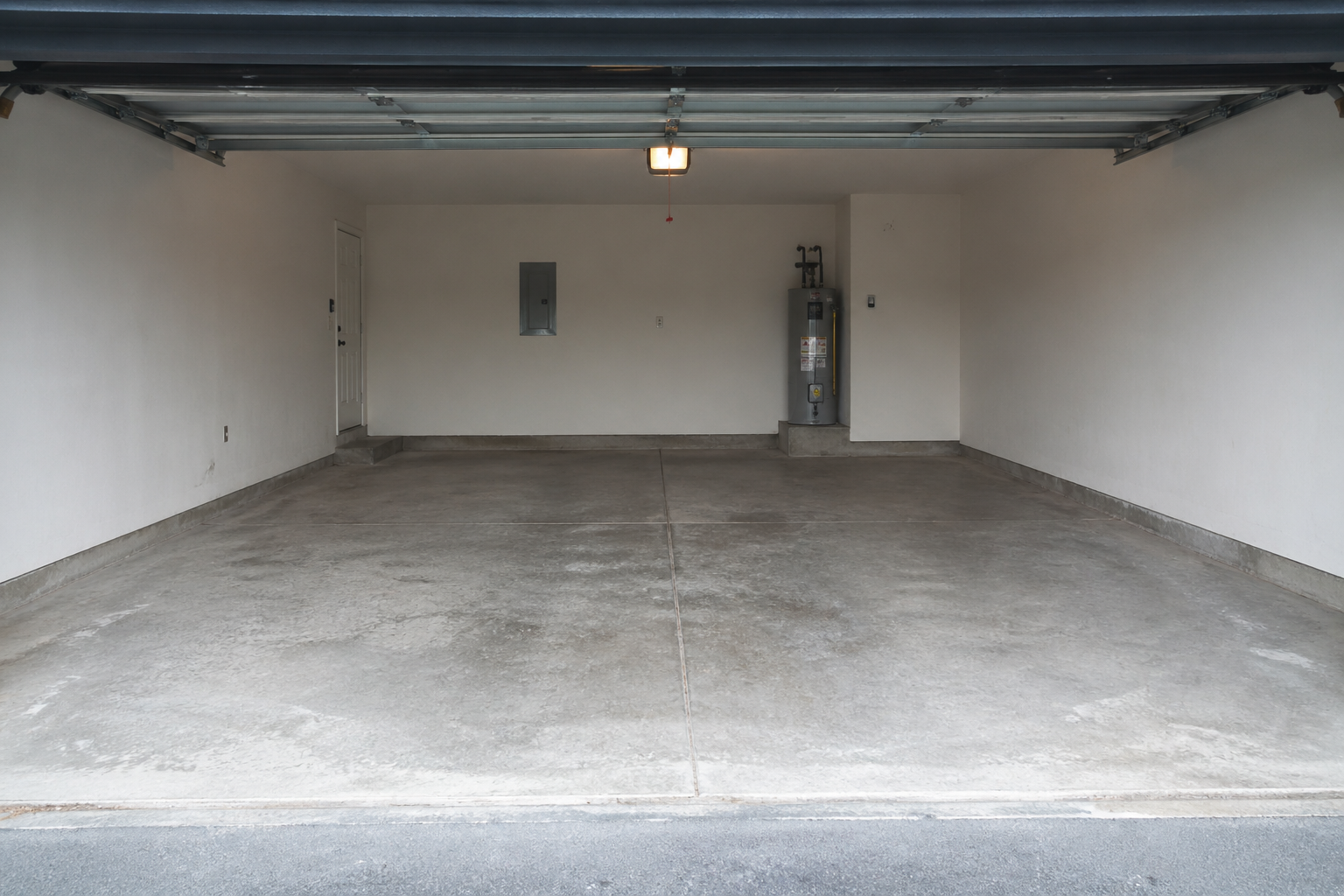
Bare concrete tells you it needs help
Uncoated concrete communicates clearly: visible staining that won't wash out, a dusty surface that never looks clean, pitting or spalling from freeze-thaw and salt, and cracks telegraphing through. If your floor hits any of those, it is time to coat it — the concrete is deteriorating and a coating protects what is left.
Existing coatings fail in predictable ways
If you already have a coating (especially an older DIY or paint job), watch for: peeling at the tire tracks, bubbling or blistering, yellowing and chalking, visible wear-through to bare concrete in traffic lanes, and cracks reopening through the coating. Any of those means the coating has lost its bond or its wear layer and needs to be replaced.
Why old coatings have to come off
You cannot coat over a failing coating — the new material bonds to the old, weak layer and peels with it. We diamond-grind the old coating off, profile the bare concrete, repair any new cracks, and start fresh. That is the only way the new floor actually bonds.
Don't wait until it's ugly
The best time to coat a floor is before it gets bad — once concrete spalls, the repair gets more involved. If your floor is showing any of these signs, request a free estimate and we will tell you honestly whether it can be recoated or needs a full strip-and-recoat.
Get a Free Estimate for Your Floor
Reading is a start — let us come measure your actual slab and give you an honest quote. Free, no-pressure, on-site.